Carpet underlay can sometimes be treated as an afterthought, but choosing the right underlay can make a significant difference to both the immediate feel and the long-term performance of a carpet installation.
A good underlay does far more than make a carpet feel softer underfoot. Depending on its construction and specifications, it can provide additional support for the carpet, reduce impact sound, improve thermal insulation, and help the carpet withstand the stresses of everyday use. Choosing the right underlay can therefore contribute to the comfort, appearance and longevity of the finished floor.
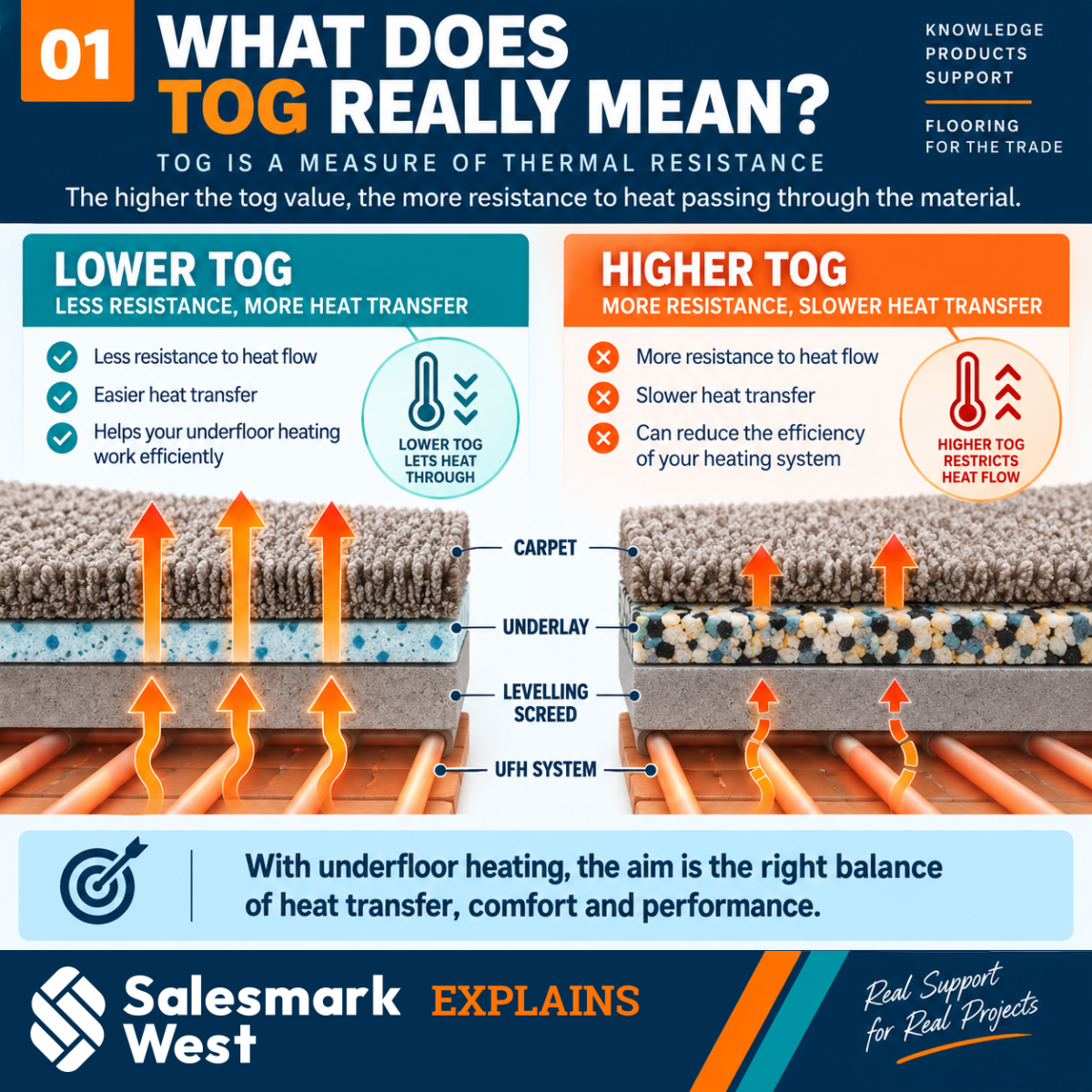
However, there isn’t one underlay that’s right for every job. A luxurious bedroom carpet has very different requirements from a busy hallway or staircase, while an installation over underfloor heating requires particular attention to thermal resistance. Contract and other high-traffic installations introduce further considerations around density, resilience and durability.
With underlays available in different materials, thicknesses, densities, tog ratings, and acoustic specifications, it’s easy to focus on a single figure – particularly thickness – when the overall specification is what really matters.
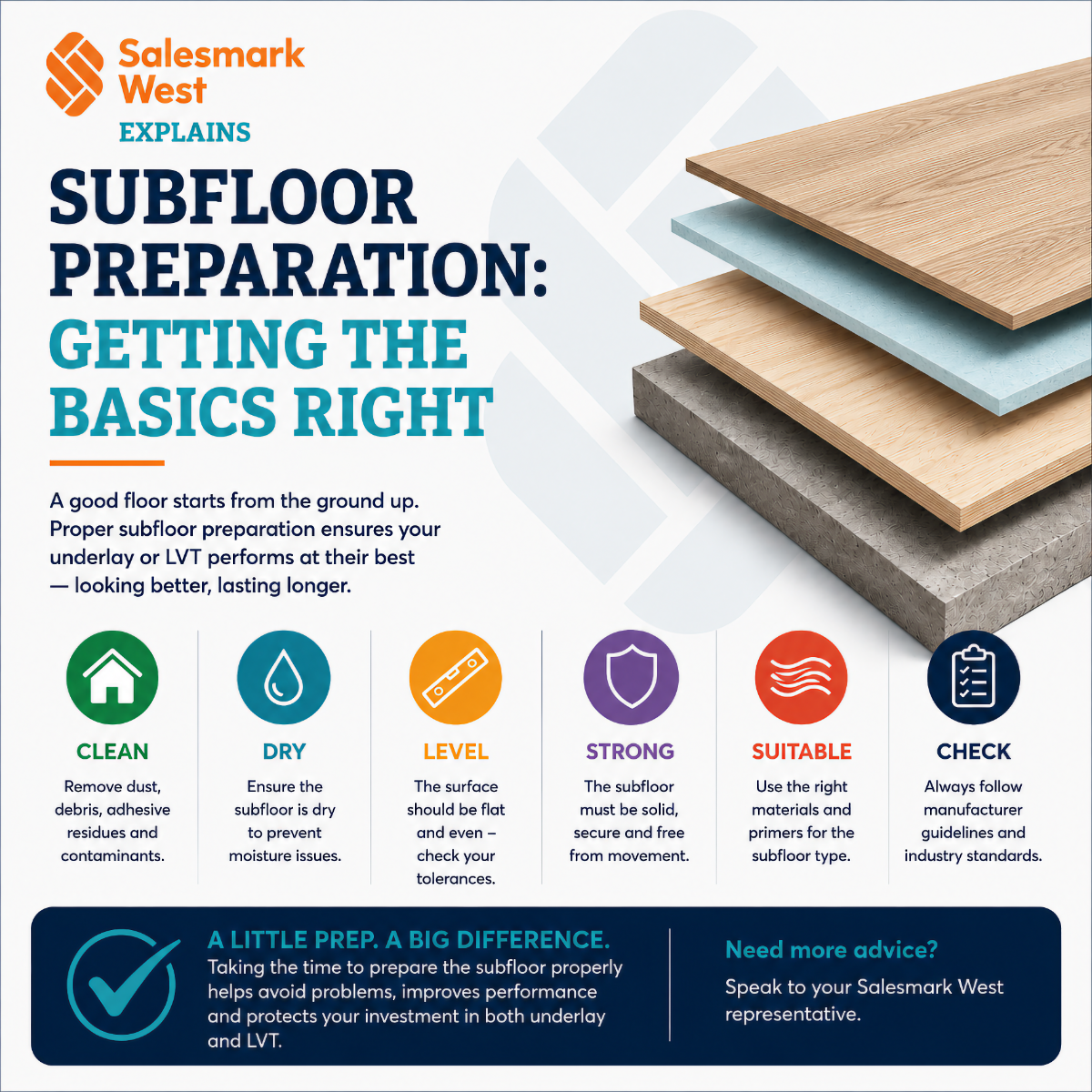
In this Salesmark West Explains guide, we look at the key underlay specifications, explain what terms such as tog, dB, thickness and density actually mean, and help you identify the right type of underlay for different carpet installations.