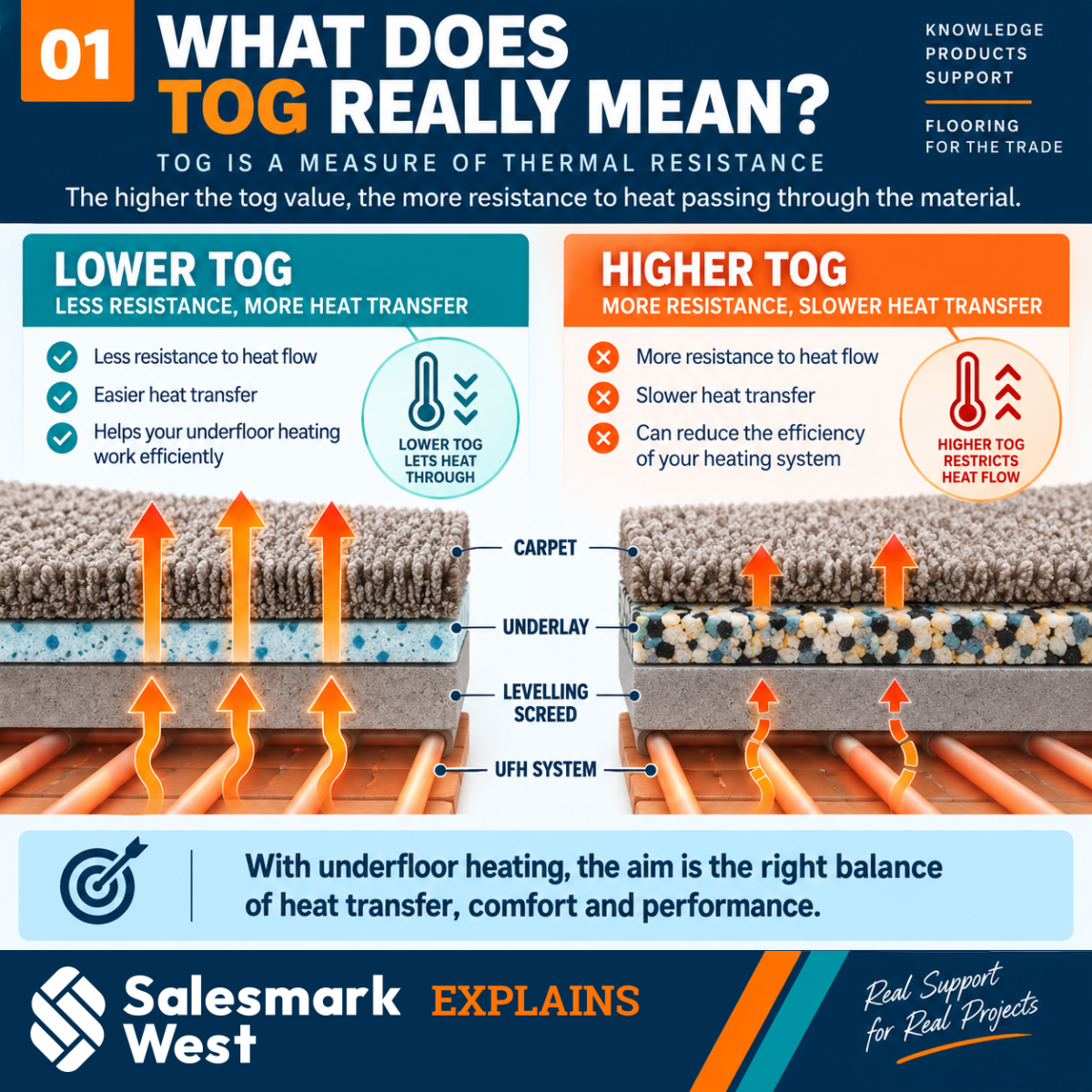
Choosing the right carpet underlay is particularly important when a floor has underfloor heating. We explain tog ratings, combined thermal resistance, why thickness can be misleading and what to check when specifying carpet and underlay over UFH.
Underfloor Heating and Carpet Underlay: What You Need to Know
Underfloor heating is becoming increasingly common in both new-build and refurbishment projects, but installing carpet over an underfloor heating system requires a little more thought than a conventional carpet installation.
The carpet and underlay create a layer between the heating system and the room. While some thermal resistance is inevitable, choosing the right combination can allow heat to pass through the floor effectively while still providing the comfort, support, and acoustic performance expected from a good carpet installation.
One of the most important points is that underlay shouldn't be selected on thickness alone. The tog rating of the carpet and the requirements of the particular underfloor heating system all need to be considered.
The principle is straightforward: the lower the combined thermal resistance of the flooring system, the more easily heat transfers into the room.
What Does Tog Mean for Carpet Underlay?
Tog is a measure of thermal resistance. In simple terms, the higher the tog value, the greater the material's resistance to heat passing through it.
For a conventional carpet installation, higher thermal insulation isn't necessarily a problem and can sometimes be desirable.
With underfloor heating, however, the objective changes. Heat generated beneath the floor needs to transfer through the floor covering and into the room.
A carpet-and-underlay combination with high thermal resistance can limit this heat transfer. The heating system may take longer to warm the room and may need to run longer to reach the required temperature.
That is why low thermal resistance is an important consideration when choosing carpet underlay for underfloor heating.
Don't Look at the Underlay Tog in Isolation
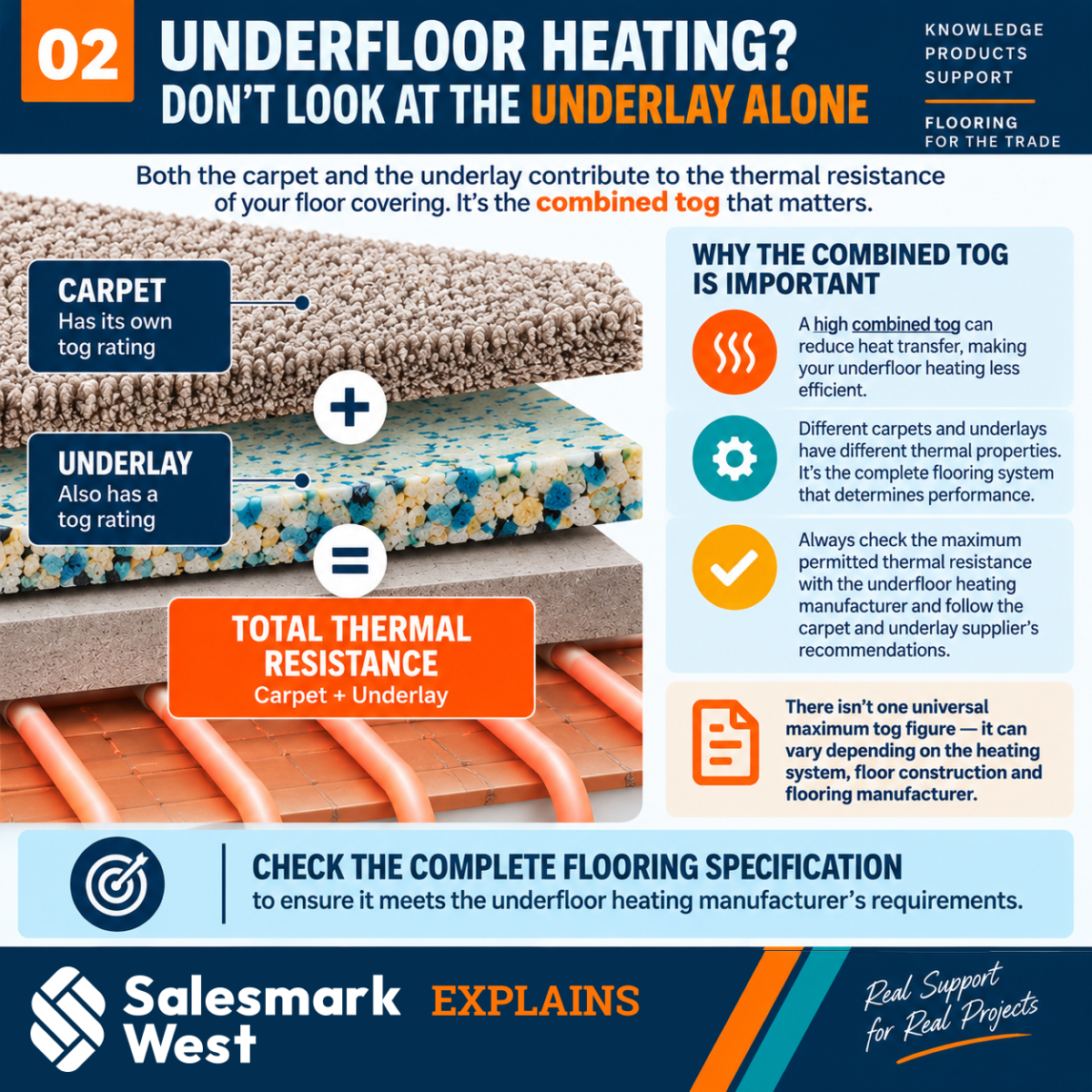
One of the most important things to understand is that the underlay is only one part of the flooring system.
The carpet itself also has a tog rating.
If a low-tog underlay is installed beneath a carpet with relatively high thermal resistance, the overall flooring assembly may still limit heat transfer.
Carpet tog + underlay tog = combined thermal resistance.
The acceptable combined figure depends on the requirements of the particular underfloor heating system, so the flooring specification should always be checked against the UFH manufacturer's guidance.
Carpets can vary considerably in their construction, backing, pile weight, and thermal properties, so there isn't a single underlay-to-carpet pairing that makes every carpet suitable for every underfloor heating system.
Is Thinner Underlay Always Better for Underfloor Heating?
No. This is one of the easiest mistakes to make when choosing an underlay for UFH.
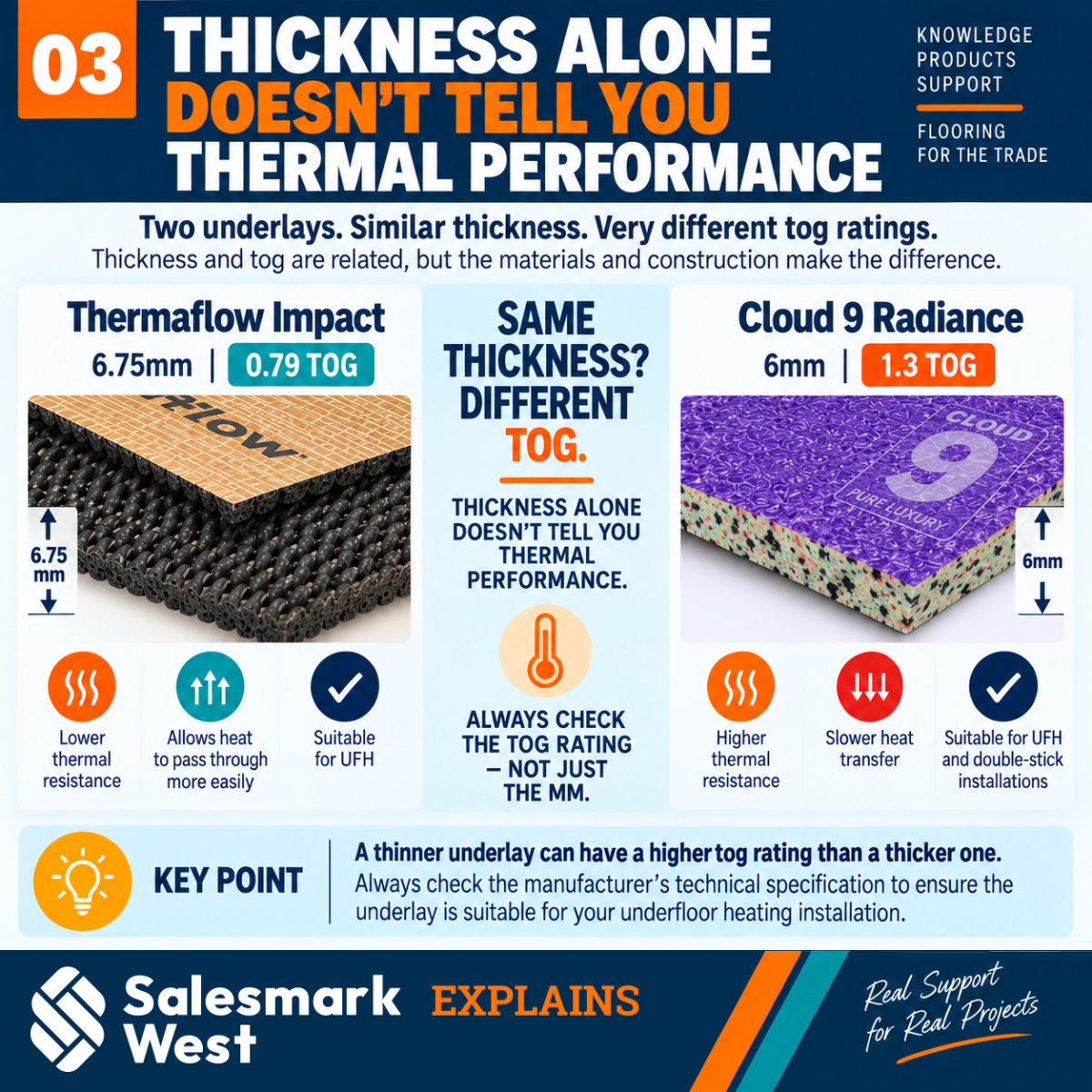
Thickness and thermal resistance are related, but they aren't the same measurement.
Two underlays of similar thickness can have very different tog ratings because their construction, density, and materials differ.
This means that simply selecting the thinnest available underlay isn't a reliable way to choose the best product for an underfloor heating installation.
Thermaflow Impact is a good example of why the technical specification matters. It has a tog rating of just 0.79, providing low thermal resistance while still delivering the resilience expected from a specialist carpet underlay.
The lesson is simple: check the tog rating, not just the millimetres.
Fitting Carpet Over UFH: Five Things to Check
A successful underfloor heating installation requires the individual components to work together as a complete flooring system.
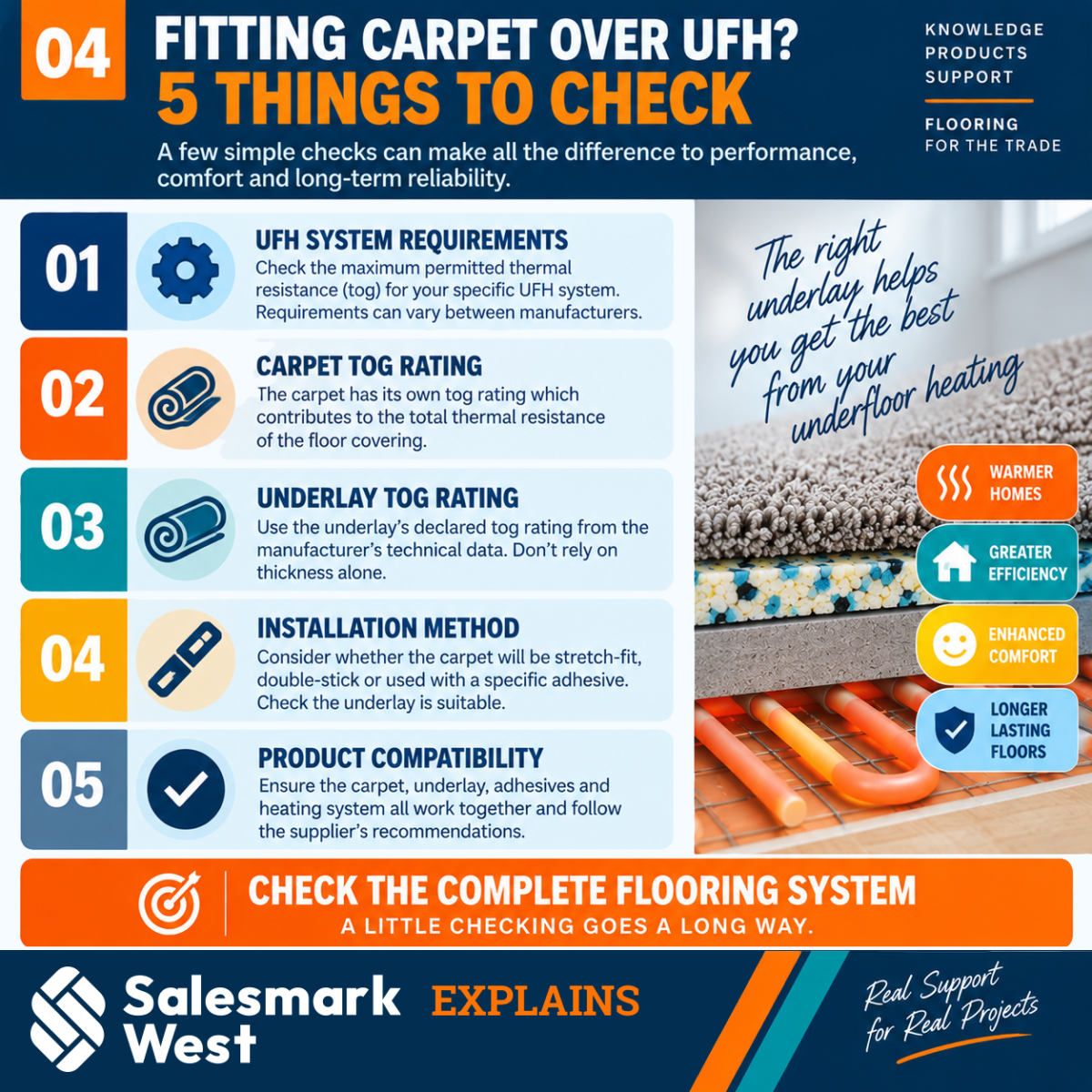
Before fitting carpet over UFH, there are five particularly important things to check.
1. Check the Underfloor Heating Requirements
Always check the UFH manufacturer's technical guidance, including any maximum permitted thermal resistance for the finished floor covering.
Different systems may have different requirements, so avoid relying on a general tog figure without checking the actual heating system being installed.
2. Check the Carpet Tog Rating
Don't assume that the carpet is thermally insignificant.
The construction, backing, pile and weight of the carpet can all influence its thermal resistance. Obtain the carpet manufacturer's technical information and include its tog value when considering the complete installation.
3. Check the Underlay Tog Rating
Use the manufacturer's declared tog figure rather than judging an underlay by thickness, appearance or how soft it feels.
A relatively luxurious underlay can still be designed specifically to provide good heat transfer when installed over UFH.
4. Check the Installation Method
Make sure the underlay is suitable for the proposed fitting method.
A conventional stretch-fit carpet installation and a double-stick installation place different demands on an underlay, so the product needs to be selected accordingly.
5. Check the Complete Flooring System
The carpet, underlay, adhesives where applicable and the underfloor heating system all need to be compatible.
Taking a few minutes to check the complete specification can help prevent performance problems later.
Which Carpet Underlays Are Suitable for Underfloor Heating?
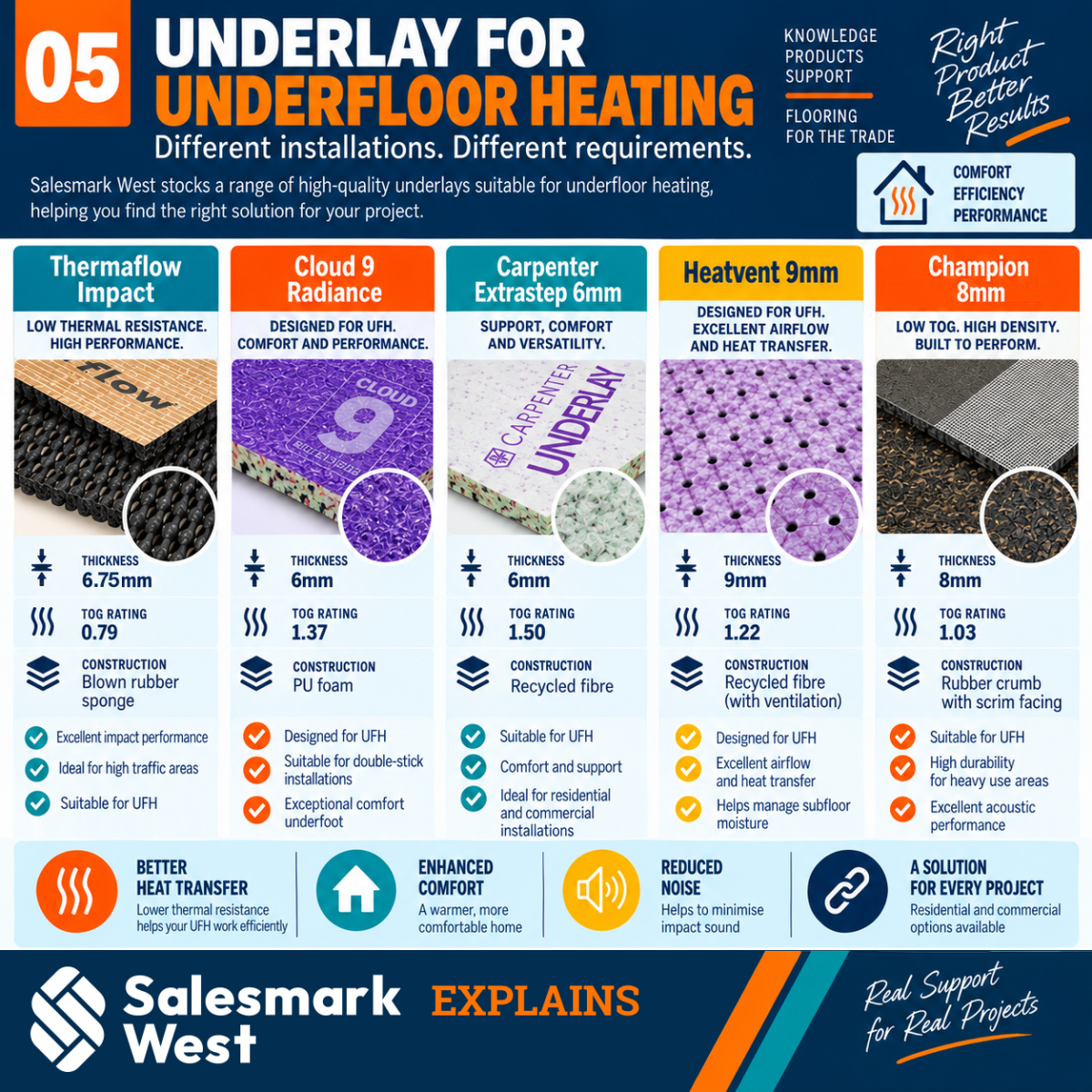
Salesmark West stocks a range of carpet underlays suitable for UFH installations, allowing selection based on the specific project rather than relying on a single underlay for every situation.
Thermaflow Impact
Thermaflow Impact is a specialist low-thermal-resistance underlay with a tog rating of 0.79. Its blown-rubber sponge construction provides resilience while facilitating efficient heat transfer through the flooring system.
Cloud 9 Radiance
Cloud 9 Radiance has been developed with underfloor heating installations in mind, combining the comfort associated with the Cloud 9 range with low thermal resistance.
It can be particularly useful where the installation requires an underlay that provides comfort without creating an excessive thermal barrier above the UFH system.
Carpenter Extrastep 6mm
Extrastep 6mm offers another option for underfloor heating installations that require a relatively thin underlay while still providing support and comfort beneath the carpet.
Extrastep has a tog rating of 1.50, so its suitability should always be considered alongside the tog rating of the selected carpet and the UFH manufacturer's requirements.
Heatvent 9mm
Heatvent 9mm has been designed specifically around underfloor heating, using a ventilated construction intended to help heat move through the carpet and underlay while retaining the comfort benefits expected from carpet underlay.
Champion 8mm
Champion 8mm is a durable rubber crumb underlay with a tog rating of approximately 1.03, providing another UFH-compatible option where resilience and long-term performance are important.
These products shouldn't simply be ranked from best to worst. The right choice depends on the carpet, the installation method, the required comfort, the expected traffic, and the UFH system itself.
What Is the Best Underlay for Underfloor Heating?
There isn't one universal answer.
If achieving particularly low thermal resistance is the priority, an underlay such as Thermaflow Impact at 0.79 tog provides a strong starting point.
However, the underlay still needs to be considered alongside the carpet and the rest of the flooring system.
In another installation, the balance between thermal performance, comfort, acoustic performance, resilience or fitting method may make a different UFH-compatible underlay more appropriate.
That's why it's better to take an application-led approach rather than choosing underlay solely based on price, thickness, or even tog rating in isolation.
Underfloor Heating and Carpet Work as a System
The key message is simple: don't choose carpet underlay for underfloor heating in isolation.
Consider the heating system, carpet, underlay and installation method together.
A lower-tog underlay can improve heat transfer, but it can't compensate for an unsuitable overall flooring specification. Equally, simply selecting the thinnest underlay isn't necessarily the answer.
Check the manufacturer's technical information, consider the combined thermal resistance of the carpet and underlay, and make sure that figure is acceptable for the UFH system being installed.
Need Advice Choosing an Underlay for Underfloor Heating?
Salesmark West supplies a wide range of professional carpet underlays, including specialist products suitable for underfloor heating.
If you're unsure which product is appropriate, please tell us which carpet you're fitting, the UFH system, the room, and the proposed installation method, and our team can help identify the most suitable options for the job.

Underfloor Heating Underlay Explained